
What if the most expensive part of your home maintenance isn’t the repair itself, but the cost of ignoring Pacific Northwest moisture standards? Whether you live in Washington, Oregon, or Idaho, the combination of constant rain and rapid moss growth means that a standard approach to roofing isn’t enough to guarantee long term safety. It’s understandable if you feel overwhelmed by the technical jargon of the 2026 Oregon Structural Specialty Code or the complexity of filing a storm damage insurance claim. You deserve a home that stands firm against the elements without the constant fear of a hidden leak or a contractor who won’t be around to honor their warranty.
This guide provides clear, professional answers to the most common questions homeowners are asking in 2026. We promise to help you understand the practical differences between materials and the steps required to secure a reliable, high quality installation. We’ll preview the latest regional regulations like Washington’s 25% replacement rule, compare the long term ROI of standing seam metal versus shingles, and explain how to find a local expert who prioritizes integrity. By the end, you’ll have the knowledge needed to ensure your property remains dry and secure for years to come.
Key Takeaways
- Understand why high-performance underlayment is the essential first line of defense against the 40+ inches of annual rainfall common in Clark County.
- Compare the long-term value of architectural shingles against the fifty year durability offered by standing seam metal systems.
- Learn how to navigate the 2026 regional building codes and the 25 percent rule that often mandates a full roofing replacement after storm damage.
- Identify the critical visual warning signs in your gutters and on your ceilings that indicate you need a professional inspection in the Vancouver area.
- Discover how to vet local specialists to ensure your project meets the latest moisture-barrier standards and remains protected by a long-term warranty.
Understanding Roofing Systems in the Pacific Northwest Climate
A roofing system is a multi-layered shield designed for both impact resistance and moisture management. It’s much more than just the shingles visible from the curb. A complete assembly includes the decking, underlayment, flashing, and ventilation working in unison to protect your home’s structural integrity. In 2026, high-performance underlayments are the primary defense against the consistent 40+ inches of annual rainfall in Clark County. For a foundational look at how these layers interact, Understanding Roofing Systems involves examining the structural integrity of the entire assembly from the rafters to the ridge caps.
Why Washington Weather Demands Better Roofing
The local climate presents unique challenges that make high-quality roofing a necessity rather than a luxury. Heavy wind loads coming through the Columbia River Gorge can compromise shingle adhesion or cause metal panels to rattle if they aren’t installed with precision. There’s also a biological factor to consider. In shaded, humid areas like Brush Prairie, moss and algae thrive. Cheap shingles often fail within 10 years in these environments because they lack the copper or zinc granules required to inhibit growth. If a severe storm causes a sudden breach, residents can rely on emergency tarping services to protect their interiors while a permanent repair is scheduled.
Key Components of a Durable Roof
Building a roof that lasts in the PNW requires focusing on the details that often go unnoticed. Drip edges and flashing are the unsung heroes of your home. They direct water away from the fascia and prevent the wood rot that leads to expensive structural damage. Proper attic ventilation is equally critical; without it, trapped humidity will cause premature roof rot from the inside out. For homes at higher elevations near Battle Ground, ice and water shields are no longer optional. These self-adhering membranes provide a watertight seal in valleys and along eaves where snow and ice are likely to accumulate and back up under the shingles.
Comparing Roofing Materials: Shingles, Metal, and Flat Systems
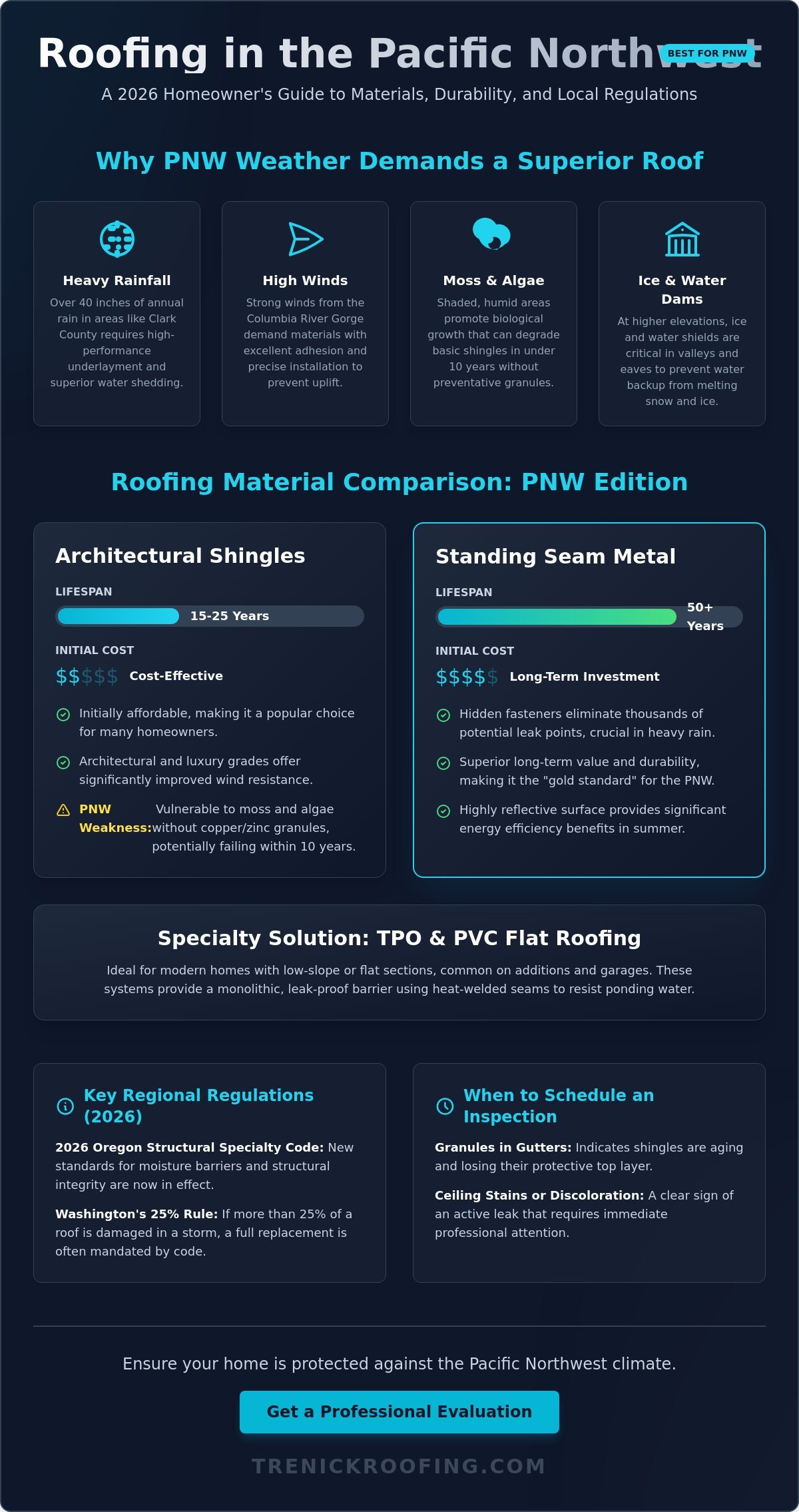
Asphalt shingles remain the dominant choice for most homeowners because of their initial cost efficiency in roofing. However, the market in 2026 has shifted toward architectural and luxury grades, which offer significantly better wind ratings than basic three-tab options. While traditional shingles typically offer a 15-25 year lifespan, standing seam metal systems provide a 50+ year potential, representing a superior long-term investment for those planning to stay in their homes. When Comparing Roofing Materials, it’s vital to weigh these immediate savings against the total lifecycle costs of the structure.
The Rise of Standing Seam Metal in Vancouver
Standing seam metal roofing has become the gold standard for longevity in the Pacific Northwest. Unlike corrugated metal that uses exposed screws, standing seam systems utilize hidden fasteners. This design eliminates the thousands of potential leak points that occur when rubber washers eventually degrade in the rain. These systems are also highly reflective, providing substantial energy efficiency benefits during increasingly hot Washington summers. Homeowners can consult this local metal roofing companies guide to see how these durable materials handle heavy PNW precipitation.
Flat Roofing Solutions: TPO vs. PVC
Modern home designs or additions often feature low-slope areas where traditional shingles aren’t suitable. For these applications, TPO and PVC flat roofing systems provide superior waterproofing. These membranes use heat-welded seams to create a monolithic, leak-proof barrier that resists ponding water. You might choose a TPO flat roofing system for residential garages or commercial properties where durability is non-negotiable. Both materials offer excellent resistance to the chemicals and oils that can degrade other flat surfaces.
If you’re unsure which material fits your budget and home style, a professional evaluation in Vancouver can clarify your best options for long-term protection.
When to Schedule a Professional Roof Inspection
Professional inspections should occur every 2-3 years to maintain the safety of your roofing system. If you’ve recently experienced a significant wind or hail event in the Vancouver area, don’t wait for a scheduled interval to check for damage. Homeowners can often spot early warning signs from the ground by looking for excessive granule loss in gutters, lifted shingles, or new water stains on interior ceilings. A comprehensive Professional Roof Inspection goes much deeper. It involves checking the structural integrity of the deck and the condition of all penetrations, including vents, skylights, and chimneys. Use this Vetting Roofing Repair Companies Near Me checklist to ensure your contractor is qualified to handle PNW-specific challenges.
The 5-Step Professional Inspection Process
- Step 1: The technician performs an exterior perimeter check to locate fallen debris, shingle fragments, or damaged gutter sections.
- Step 2: A detailed roof-level analysis follows, including a physical check of shingles for adhesion and metal panels for secure fasteners.
- Step 3: An attic-side moisture and light-gap check identifies hidden leaks that haven’t yet caused visible damage to your drywall.
- Step 4: Specialists examine all penetrations, ensuring that flashing around skylights and vents remains watertight and free of debris.
- Step 5: A final assessment of the roof deck’s structural integrity confirms the system can handle future snow or wind loads.
Adhering to a rigorous inspection protocol, as practiced by experts like Rainier Roofing LLC, ensures that every component of the roofing system is functioning correctly to prevent moisture intrusion and structural damage.
Repair vs. Replacement: Making the Call
Deciding between a targeted repair and a full project often comes down to the ‘30% Rule.’ If more than 30% of the roofing surface is compromised, a full roof replacement is usually the most cost-effective path forward. This is especially true when 2026 building codes require specific moisture barriers that older roofs lack. For homeowners in Battle Ground and Longview, navigating storm damage restoration and insurance claims requires a partner who provides honest, documented evidence of damage. If you need a local expert to help you make this decision, contact the team at Trenick Roofing for a transparent, no-pressure assessment of your property.
Securing Your Home’s Future in the Pacific Northwest
Navigating the complexities of moisture management and material selection is the most effective way to ensure your property remains a safe haven. You now understand that a durable roof requires a synchronized system of high-performance underlayment and proper ventilation to combat the 40 plus inches of annual rainfall in our region. Whether you choose the fifty year longevity of standing seam metal or the reliable waterproofing of a TPO flat system, the goal is always enduring security. Regular inspections remain your best defense against the hidden rot and wind damage that often follow a typical Vancouver storm.
Finding a partner who prioritizes your well-being over a quick sale makes the entire process frictionless. Trenick Roofing is a family-owned and operated business led by Trevor and Nick. We specialize in PNW-proven systems and believe in expert craftsmanship without the high-pressure sales tactics common in the roofing industry. We are here to act as your principled advocate in property maintenance. To get started with a transparent assessment of your home, you can Schedule Your Professional Roof Inspection with Trenick Roofing today. Your home deserves the protection of a team that is deeply rooted in our local community values.
Frequently Asked Questions
How much does a new roof cost in Vancouver, WA in 2026?
Total investment for a new roof depends on your home’s square footage and the specific materials you select. Southwest Washington roofing costs are influenced by regional moisture-barrier codes and current labor wages. While asphalt shingles are often the most accessible option, metal systems offer a different long-term value proposition. It’s best to request a detailed estimate that accounts for your specific roof pitch and complexity.
What is the best roofing material for high-wind areas like the Columbia River Gorge?
Standing seam metal is the most resilient choice for high-wind environments like the Columbia River Gorge. These systems utilize hidden fasteners and interlocking panels that are rated for extreme wind speeds. Unlike traditional shingles that can lift or blow off during a storm, metal panels are secured directly to the deck. This design provides superior peace of mind for homeowners in exposed, windy areas.
How do I know if my roof leak is an emergency?
A roof leak becomes an emergency when water is actively entering your living space or causing structural sagging. If you notice large amounts of water dripping from a ceiling or if a fallen tree has breached the structure, you need immediate intervention. In these cases, emergency tarping services are used to prevent further interior damage until a permanent repair is possible. Don’t wait to address visible structural breaches.
Does insurance cover roof replacement for old roofs with storm damage?
Insurance coverage typically applies to sudden, accidental damage from wind or hail rather than gradual wear and tear. If your older roof is damaged by a verified storm event, your policy may cover the cost of restoration. However, most adjusters will prorate the value based on the age of the materials. It’s important to have a professional inspection to document the specific cause of the damage before filing a claim.
Can I install a new roof over my existing shingles?
Installing a new layer of shingles over an old one is generally discouraged and often violates local building codes. An overlay adds significant weight to your home’s structure and can trap heat, which shortens the lifespan of the new materials. Removing the old roofing allows for a full inspection of the wood decking to ensure no hidden rot exists before the new system is installed. This ensures a stable foundation.
How long does a typical residential roof replacement take to complete?
Most residential roof replacements are completed within one to three days. The exact timeline depends on the size of your home, the complexity of the roof’s geometry, and current weather conditions. While a straightforward shingle installation is quick, custom metal work may require additional time for precision fitting. A professional crew will prioritize a clean job site and minimal disruption to your daily routine throughout the process.