
Last November, a local homeowner discovered that a small patch of moss had evolved into a structural nightmare, resulting in hidden damage that a standard inspection missed. In a city that averages 155 rainy days every year, your roof is your only defense against the relentless moisture of the Pacific Northwest. Securing quality portland roofing shouldn’t involve dodging aggressive sales tactics or wondering if your contractor is being honest about the state of your shingles.
You likely already know that moss and algae growth are more than just eyesores; they’re active threats to your home’s longevity. This guide promises to help you master the essentials of regional roofing, from moisture-resistant materials to vetting local experts for long-term protection. We’ll explore how to achieve a leak-free home and maximize your ROI by focusing on 50-year manufacturer-backed warranties and transparent communication that puts your needs first. By the end of this article, you’ll have a clear roadmap for protecting your property through 2026 and beyond.
Key Takeaways
- Learn how to defend your home against the PNW “Triple Threat” by understanding the science of moisture-management systems built for heavy rainfall.
- Compare the durability and lifespans of shingles versus metal to select the most cost-effective material for your specific roof type.
- Identify the #1 cause of local leaks and see why standard storm restoration techniques often fail in our unique humidity.
- Navigate the hiring process with confidence by learning how to verify CCB licensing and avoid common high-pressure sales tactics.
- Discover how a professional portland roofing partner provides peace of mind through “no payment until finished” policies and neighborly integrity.
The Science of Portland Roofing: Why the PNW Climate Demands More
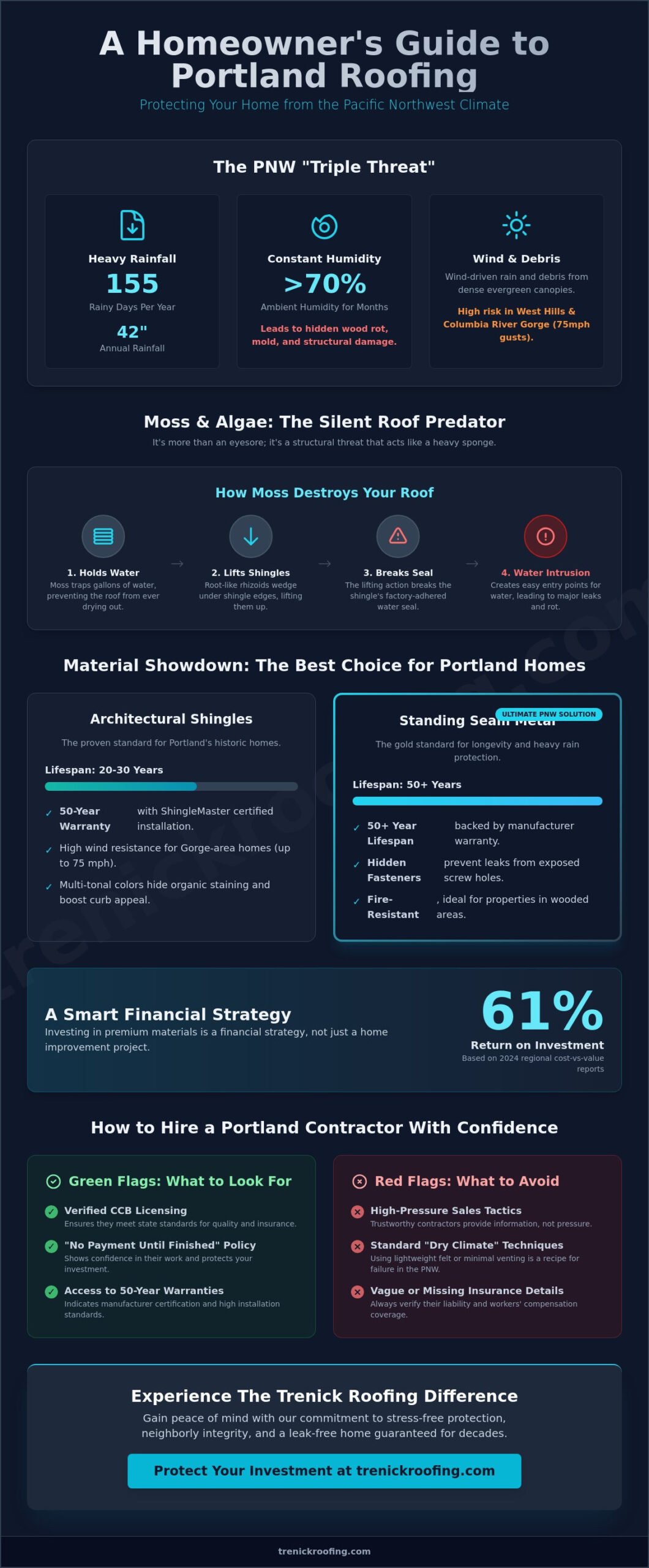
Effective portland roofing is much more than a collection of shingles; it’s a precision-engineered moisture-management system built to withstand the 42 inches of annual rainfall common in our region. In the Pacific Northwest, your home faces a relentless “Triple Threat” of environmental stressors. This includes constant ambient humidity that often stays above 70% for months, heavy seasonal downpours, and wind-driven debris from our dense evergreen canopy. Without a system designed for these specific loads, a standard roof can fail years before its intended lifespan.
Ventilation plays a critical role in this ecosystem, especially for homeowners in Clark County. When air doesn’t circulate properly, moisture traps itself in the attic, leading to wood rot and mold growth that can compromise structural integrity in as little as 5 years. This isn’t just a maintenance issue; it’s a safety and health concern for your family. PNW roofing durability is defined by the seamless interaction between a high-performance synthetic underlayment and a balanced ventilation system that allows the structure to breathe while remaining watertight.
The Impact of Rainfall and Humidity on Roof Lifespans
Constant dampness is the primary enemy of local building materials. It accelerates the loss of protective granules on asphalt shingles, which are essential for UV protection and fire resistance. The Portland metro area features diverse micro-climates that require specialized knowledge. For example, homes in the West Hills face steeper wind gradients, while properties near the Columbia River Gorge experience higher pressure differentials that can drive rain upward into vents. Standard “dry climate” roofing techniques, such as using lightweight felt paper or minimal intake venting, often result in premature deck rot in Southwest Washington homes.
- West Hills: Higher risk of wind-driven rain and branch impact.
- Columbia River Gorge: Extreme wind uplift requirements for shingle attachment.
- East County: Increased debris accumulation from Douglas firs and maples.
Moss and Algae: More Than Just an Eyesore
In our climate, moss is a biological predator that acts as a heavy sponge. It holds gallons of water directly against the shingle surface, preventing the roof from drying out even during brief sunny spells. As moss matures, its root-like structures, known as rhizoids, wedge themselves under shingle edges. This lifting action breaks the factory seal and creates easy entry points for water during the next storm. To provide long-term protection, we utilize shingles infused with copper granules or install zinc strips at the roof ridges. These materials release ions during every rain cycle to naturally inhibit organic growth and keep your portland roofing system clean and functional for decades.
Choosing the Best Roofing Materials for Portland Homes
Portland averages 154 rainy days per year. Selecting the right portland roofing material is about balancing aesthetics with the 36 inches of annual rainfall we receive. Most homeowners choose between architectural shingles, standing seam metal, or TPO membranes. While shingles typically last 20 to 30 years, metal systems often exceed 50 years of service. Investing in premium materials provides a 61% return on investment based on 2024 regional cost-versus-value reports. This makes your choice a financial strategy as much as a home improvement project.
High-Performance Shingle Roofing
Architectural shingles remain the standard for Portland’s historic Craftsman and Bungalow homes. We prioritize ShingleMaster certified installations because they unlock 50-year non-prorated warranties that offer true peace of mind. In areas like the Columbia River Gorge where wind gusts hit 75 mph, shingle thickness and weight are critical for resistance. We recommend multi-tonal colors for several reasons:
- They hide the dark organic staining common in the PNW.
- They provide a high-definition look that enhances curb appeal.
- They blend naturally with the local landscape and wooded environments.
Standing Seam Metal Roofing: The Ultimate PNW Solution
Standing seam metal is the gold standard for heavy rain. Unlike screw-down panels, standing seam uses hidden fasteners. This prevents water from seeping through exposed holes during a heavy 2-inch downpour. It’s a fire-resistant choice that offers protection for properties in wooded areas like Battle Ground. While the initial cost is higher, the 50-year manufacturer-backed warranty means it’s likely the last roof you’ll ever buy. You can explore our durable metal options to see how they fit your home’s architecture.
Flat Roof Solutions: TPO and PVC Systems
Flat roofs on modern additions or commercial buildings face unique challenges. Choosing the right portland roofing professional for these projects is vital because traditional torch-down methods often fail under standing water. We specialize in TPO flat roofing systems because they use heat-welded seams. This creates a “pond tanking” effect that remains watertight even under several inches of water. These membranes reflect UV rays, which helps lower cooling costs during our increasingly hot summers. We focus on these advanced systems because they provide the long-term protection our neighbors deserve without the stress of constant leaks.
Common Roofing Issues and Repair Needs in the Portland Metro
Failed flashing and pipe boots represent the #1 cause of leaks for portland roofing systems. While homeowners often worry about shingles blowing off, the reality is that water most frequently enters where the roof meets a vertical surface, such as a chimney or a vent pipe. In the Pacific Northwest, storm damage restoration looks different than in the hail-prone Midwest. We deal with prolonged moisture saturation and high-velocity wind gusts that lift shingles, allowing our relentless rain to seep underneath. This saturation can cause shingles to lose granules at an accelerated rate, shortening the roof’s lifespan by 5 to 10 years if left unaddressed.
Professional inspections are essential after major wind events, such as the January 2024 winter storms that saw gusts exceeding 50 mph across the Willamette Valley. You’re likely to encounter “roofing cowboys” during these times. These fly-by-night operations offer cheap, fast patches but often ignore the structural rot beneath. A simple shingle patch won’t save a roof if the plywood decking has already softened from months of moisture. Our approach prioritizes integrity, ensuring we address the root cause so you have long-term protection rather than a temporary fix.
Identifying Leaking Roof Symptoms Early
You don’t need to wait for a puddle on the floor to know you have a problem. Small water spots on your ceiling or walls often signal a slow leak that’s been active for months. Spotting these early can save you thousands in structural repairs. Consider these common warning signs:
- Dark or yellowing stains on ceiling drywall.
- Peeling paint or “bubbling” near the tops of interior walls.
- Granules accumulating in your downspouts, indicating shingle erosion.
- Visible rot on fascia boards caused by clogged gutters backing up water under the roof edge.
If you notice a leak during the peak of our rainy season, emergency tarping is a critical first step. It provides immediate peace of mind and prevents further interior damage while we wait for a dry window to perform a permanent, high-quality repair.
Skylight and Ventilation Failures
Skylights add beautiful natural light to PNW homes, but they are notorious for failing before the shingles do. Most skylight seals have a 20-year lifespan. If your roof is approaching that age, we recommend replacing the skylights during the roof installation to ensure a seamless seal. It’s also vital to distinguish between actual leaks and simple condensation. Our humid climate often causes moisture to build up on the glass, which can look like a leak but is actually a ventilation issue. To protect your home’s foundation from the massive volume of local rainfall, we pair our roof repairs with seamless gutter installation. These systems eliminate the leaky joints found in DIY kits, moving thousands of gallons of runoff safely away from your home for a stress-free experience.
How to Hire a Portland Roofing Contractor: Vetting for Integrity
Hiring a portland roofing professional shouldn’t feel like a gamble. In the Pacific Northwest, your roof is the primary defense against 40 inches of annual rainfall, making the choice of contractor a high-stakes decision. Start by verifying active licensing through the Oregon Construction Contractors Board (CCB) or the Washington Department of Labor and Industries. In 2024, Oregon law requires residential contractors to carry at least $500,000 in general liability insurance. This protects you from being held liable for accidents on your property. National “storm chaser” franchises often descend on the area after a heavy weather event, but these companies rarely have deep roots in the community. Choosing a local, family-owned business ensures you have a point of contact who will still be here in a decade if a leak develops.
Transparency in the estimate is your best defense against hidden costs. A professional quote should detail specific material brands, shingle weights, and precise labor guarantees. Avoid any contractor who uses high-pressure sales tactics, such as offering a 20% discount only if you sign a contract before they leave your driveway. These “today-only” deals are designed to prevent you from doing your due diligence. A reputable expert provides a clear, written proposal and gives you the space to make an informed choice for your home’s protection. For a deeper look at how to evaluate your options, our guide to roofing companies in Portland Oregon walks you through the full vetting process with transparent pricing data and key questions to ask.
Questions to Ask Every Roofing Contractor
- Do you use sub-contractors or an employee-focused crew? Companies that employ their own crews often maintain better quality control and safety standards than those that outsource labor to the lowest bidder.
- What is your payment policy? Be wary of any contractor demanding 50% or more upfront. Ethical professionals often operate on a “no payment until finished” basis, which demonstrates confidence in their work and financial stability.
- Can you provide local references? Ask for the addresses of homes completed in Battle Ground, Vancouver, or Longview within the last 12 to 24 months. A solid track record in these specific climates proves they understand regional weather challenges.
Understanding Roofing Warranties
A 50-year warranty is a common selling point, but it’s often misunderstood. Most standard warranties only cover material defects, leaving the homeowner responsible for the expensive labor costs of a repair. To get true peace of mind, look for manufacturer-backed warranties that cover both materials and labor. These premium protections are only available through contractors with high-level certifications, such as ShingleMaster status. When you invest in portland roofing, ensure the warranty is transferable. Having a certified, transferable 50-year warranty can increase your home’s resale value by providing the next owner with guaranteed protection.
The Trenick Roofing Difference: Stress-Free Protection
Trevor and Nick built this company on a foundation of neighborly trust and technical excellence. They understood that homeowners don’t just want a new layer of shingles; they want the peace of mind that comes from knowing their family is protected. This philosophy transforms the typical contractor-client dynamic into a partnership. By focusing on honest communication and professional craftsmanship, Trenick Roofing has become a staple for those seeking reliable portland roofing solutions across the metro area and Southwest Washington.
The hallmark of this trust is our “No Payment Until Finished” policy. While many contractors demand significant deposits before a single nail is driven, we’ve eliminated that financial anxiety. You don’t pay a cent until the project is complete and meets our rigorous standards. This policy ensures our team is fully committed to your satisfaction from the initial inspection to the final cleanup. We’ve combined this ethical approach with elite credentials, maintaining ShingleMaster certification to provide you with the highest level of installation quality available in the industry.
- Zero Upfront Costs: We carry the financial weight of the project so you don’t have to.
- Elite Credentials: As ShingleMaster certified installers, we belong to the top 1% of roofing contractors nationwide.
- Premium Materials: We use heavy-duty components specifically designed to withstand the unique moisture and wind patterns of the Pacific Northwest.
- Regional Expertise: Our crews are deeply familiar with the building codes and climate challenges from Vancouver, Washington, down through the entire Portland metro.
Our Employee-Focused Approach to Quality
We believe that a high-quality roof starts with a respected and well-trained crew. Unlike companies that rely on rotating subcontractors, we invest heavily in our employees. A happy, stable team translates directly to better attention to detail on your home. Our technicians are trained to provide honest assessments rather than following a script for high-pressure sales. We don’t use “limited time offers” to force a signature; we provide the facts you need to make an informed decision. When storm damage strikes, our team responds with integrity and speed, focusing on restoration rather than exploitation.
Get Your Free Portland Roofing Estimate Today
Protecting your home shouldn’t be a source of stress. We’ve streamlined our inspection process to be as transparent as possible, giving you a clear look at your roof’s current health without any obligation. Every new installation we perform comes with the option for a 50-year manufacturer-backed warranty, ensuring your investment is protected for decades to come. Our team is ready to show you why your neighbors trust us with their most valuable asset. Experience a different kind of portland roofing service that puts your needs first.
Don’t wait for a small leak to become a major repair. Schedule your professional roof inspection with Trenick Roofing today and secure your home with the protection it deserves.
Secure Your Home Against the Pacific Northwest Elements
Your roof is the first line of defense against the relentless moisture and shifting temperatures that define our region. Choosing materials designed for high humidity and vetting a contractor who understands local climate science are the most important steps you can take for your property’s longevity. Since 2018, our family-owned and operated team has focused on providing long-term protection that stands up to the specific demands of the 2026 climate. We believe that quality portland roofing should be a transparent process built on technical excellence and neighborly trust.
We’ve removed the anxiety from the renovation process by offering a 50-year manufacturer-backed warranty and a strict policy where you make no payment until the job is finished. You deserve a roof that lasts for decades and a service experience that respects your home. It’s time to stop worrying about potential leaks and start feeling confident in the structure over your head. We’re ready to provide the durable, honest protection your family needs to stay dry and safe through every season.
Get Your Stress-Free Roofing Estimate Now
Frequently Asked Questions
How much does a new roof cost in Portland in 2026?
A roof replacement in Portland generally costs between $15,000 and $45,000 depending on your home’s square footage and material choice. According to the 2024 Remodeling Cost vs. Value Report, the average asphalt shingle replacement in our region sits at $32,000. These figures fluctuate based on current supply chain rates and labor costs. We provide transparent, itemized quotes so you know exactly where your investment goes without any high-pressure sales tactics.
What is the best time of year to replace a roof in the Pacific Northwest?
Late summer and early autumn, specifically from July through September, offer the most reliable weather for roofing projects in the Pacific Northwest. These months provide the dry conditions needed for shingles to seal properly and prevent moisture entrapment. While our crews work year-round, scheduling during these 90 days reduces the risk of rain delays. We monitor local forecasts daily to ensure your home stays dry throughout the entire installation process.
How long does a typical roof replacement take in Vancouver, WA?
A typical roof replacement in Vancouver, WA, takes between 2 and 4 days to complete from start to finish. Factors like roof pitch, the number of existing layers to remove, and the total square footage influence this timeline. We prioritize a stress-free experience by maintaining a clean job site and finishing the work efficiently. You won’t pay a dime until the project is fully completed and your property is spotless.
Does homeowners insurance cover roof leaks caused by moss?
Most standard homeowners insurance policies won’t cover roof leaks caused by moss growth because they view it as a maintenance issue. Moss can lift shingles and trap moisture, leading to rot over a period of 5 to 10 years. Insurance providers expect homeowners to keep their roofs clear of debris and organic growth. Regular inspections help identify these problems early, ensuring your 50-year manufacturer-backed warranty remains valid and your home stays protected.
Is metal roofing better than shingles for Portland weather?
Metal roofing offers superior longevity in Portland weather, lasting up to 70 years compared to the 25 to 30 years expected from high-quality asphalt shingles. Metal handles our 40 inches of annual rainfall exceptionally well and resists the moss growth common in the PNW. However, modern ShingleMaster Certified installations provide excellent protection at a lower initial cost. Both options are durable, but metal is a great choice for those seeking a permanent, low-maintenance solution.
What should I do if my roof is leaking during a heavy rainstorm?
You should place a bucket under the leak and clear any nearby furniture immediately to minimize interior water damage. If you can safely access your attic, look for the entry point, but never climb onto a wet roof during a storm. Call a trusted portland roofing professional to schedule an emergency tarping service. Our team responds quickly to stabilize the situation, providing you with peace of mind until the weather clears for a permanent repair.
How can I tell if I need a full roof replacement or just a repair?
You likely need a full replacement if more than 25 percent of your roof shows signs of damage or if the system is over 20 years old. Check for consistent granule loss in your gutters or shingles that are curling and brittle. If the damage is isolated to a small area from a fallen branch, a simple repair might suffice. We provide honest assessments to help you choose the most cost-effective path for long-term protection.
Why is attic ventilation so important for Portland homes?
Proper attic ventilation is vital because it prevents heat and moisture buildup that can rot your roof deck and reduce shingle life by 50 percent. In our damp climate, stagnant air leads to mold growth and ice damming during winter freezes. A well-ventilated system balances intake and exhaust air, keeping your home cooler in summer and drier in winter. This technical detail is a core part of our portland roofing standards for every installation.