
Imagine waking up to the steady rhythm of Pacific Northwest rain, only to realize that rhythm is now dripping into your attic. It’s a moment of pure anxiety for any homeowner. Understanding the storm damage roof replacement process shouldn’t add to that stress. You’re likely worried about what happens when those old shingles come off, fearing hidden rot or a yard full of debris that endangers your family and pets.
We understand that your home is your most significant investment, and the thought of a loud, messy construction site on your lawn is daunting. You deserve a transition that is as seamless as the new gutters we install. This guide walks you through every critical stage of a modern roof restoration. We’ll cover everything from the initial PNW-specific inspection to the final quality walkthrough. You will learn how we protect your property during the tear-off phase and ensure your yard is left spotless, giving you a leak-free home that adds genuine long-term value. By the end, you’ll have the confidence to manage your project with total peace of mind.
Key Takeaways
- Learn why a professional inspection is the foundation of a successful project, identifying structural vulnerabilities and essential ventilation needs before work begins.
- Understand every stage of the storm damage roof replacement process, from the complete tear-off of old materials to the final quality assurance walkthrough.
- Discover how material choices, such as high-wind shingles or standing seam metal roofing, are tailored specifically to withstand Clark County’s unique weather patterns.
- See how meticulous cleanup protocols, including magnetic nail recovery, protect your lawn and family immediately after the installation is complete.
- Gain confidence in meeting 2026 safety standards to ensure your roof restoration adds measurable value and lasting security to your home.
The Pre-Installation Phase: Inspection, Insurance, and Material Strategy
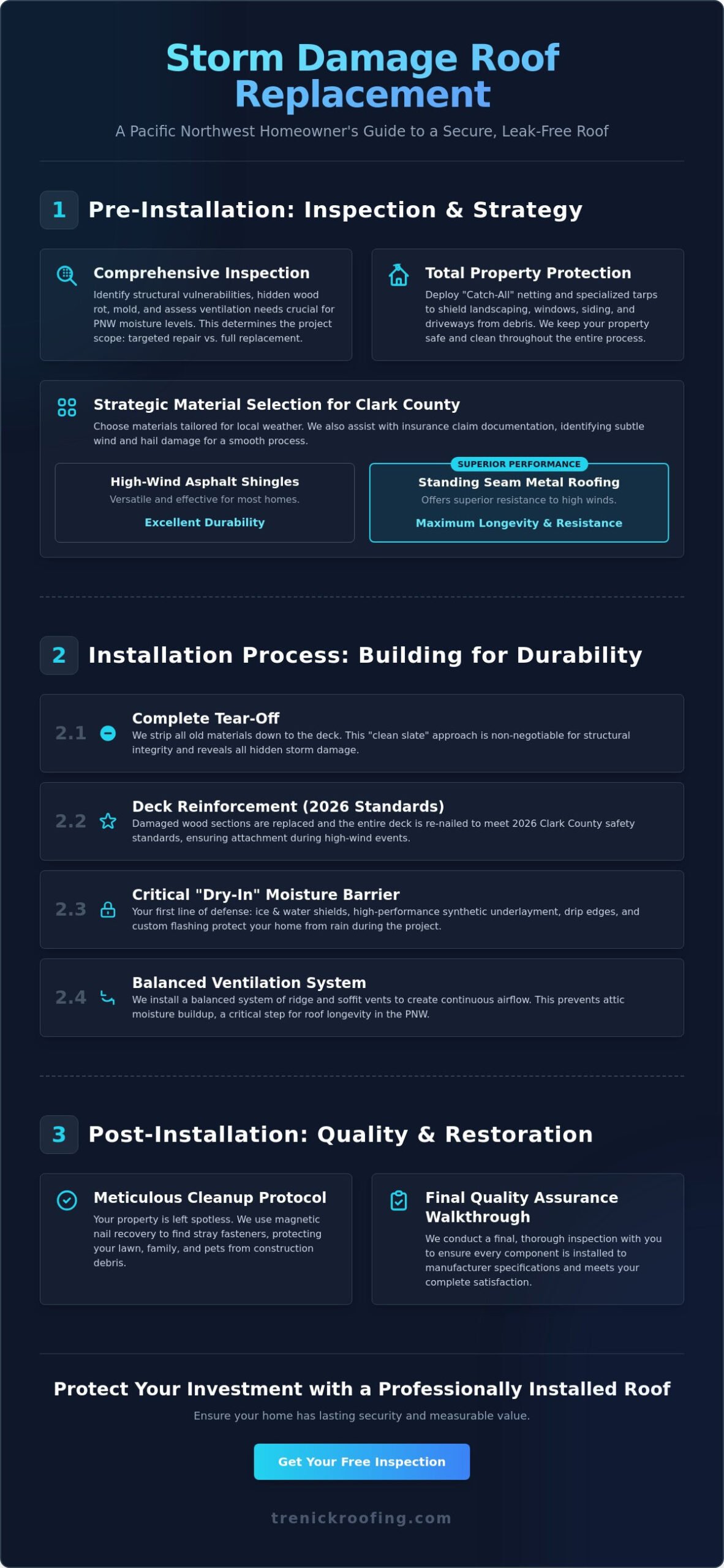
The storm damage roof replacement process begins long before the first shingle is removed. It starts with a comprehensive professional roof inspection that goes deeper than a simple visual check. We evaluate structural vulnerabilities and existing ventilation systems to ensure your home can handle the unique moisture levels of the Pacific Northwest. Proper airflow prevents the attic heat buildup that can prematurely age your materials, making this initial assessment vital for long-term safety.
Logistical planning is the next critical step in our consultative approach. We synchronize our work schedule with PNW rain windows to ensure your home stays dry during the transition. Our team also coordinates material delivery carefully to minimize the impact on your driveway and neighborhood access. Before any work starts, we deploy property protection systems. We use specialized tarps and “Catch-All” netting to shield your landscaping, windows, and siding from falling debris, keeping your property safe and clean throughout the project.
Evaluating the Existing Roof Deck for Storm Damage
A surface-level quote isn’t enough when your home’s security is at stake. We prioritize checking the roof deck for wood rot and mold that often hide beneath old layers. Identifying these issues early helps you decide between a targeted roof repair service and a necessary full-depth replacement. If the underlying plywood is soft or compromised, it won’t provide the secure grip required for new fasteners, which is why we never install new materials over a failing deck.
Navigating Insurance and Strategic Material Selection
Documenting damage accurately is essential for a smooth insurance claim in Washington. We help you identify the subtle signs of wind and hail impact that adjusters look for, ensuring your claim reflects the true state of your property. Regarding material selection, we focus on durability and local performance. While many homeowners explore various Asphalt Shingle Options for their versatility, others prefer the long-term performance of standing seam metal roofing. Both choices are effective, but metal offers superior resistance against the high winds common in the Vancouver area.
Step-by-Step Installation: From Tear-Off to Final Layer
The heart of the storm damage roof replacement process is the transition from a compromised structure to a fortified one. We strip the roof bare. This isn’t just about disposal; it’s about structural integrity. Unlike common industry shortcuts that suggest a simple overlay, we perform a complete tear-off of all old materials down to the plywood or OSB decking. This ensures a clean slate, allowing us to see exactly what the storm left behind.
Following the tear-off, our team inspects every inch of the wood. We replace damaged sections and re-nail the entire surface to meet 2026 Clark County safety standards. This step is often overlooked, but it’s vital for ensuring your roof stays attached during high-wind events. Once the deck is secure, we apply the primary roofing material using manufacturer-specific nailing patterns. These precise techniques are required to maintain your long-term warranty protection and ensure every shingle performs as designed.
The Critical Dry-In and Moisture Barrier Process
Protecting your home from sudden Vancouver rain showers is our immediate priority during the transition. We install “dry-in” layers, including ice and water shields in vulnerable areas and high-performance synthetic underlayment across the entire surface. We also prioritize Post-Storm Safety and Documentation by ensuring all structural repairs are verified before the final layers go on. Drip edges and custom flashing are integrated around chimneys and valleys to prevent leaks in these high-moisture zones. If you are planning a roof replacement in Battle Ground, this moisture barrier is your first line of defense against the elements.
Specialized Installation for Metal and TPO Systems
Different structures require specialized techniques to ensure longevity. For commercial or residential low-slope areas, we install TPO flat roofing systems using heat-welded seams for a truly waterproof finish. We also address the most overlooked step in PNW roofing: proper ventilation. We balance ridge vents with soffit vents to create a continuous airflow that prevents moisture buildup. This methodical approach ensures your new system isn’t just a cover, but a high-performing climate control tool for your home.
Post-Installation: Quality Assurance and Property Restoration
The final phase of the storm damage roof replacement process is where technical craft meets property stewardship. We believe a job isn’t finished until your home is secure and your yard is spotless. Our crews perform a meticulous cleanup using industrial-strength magnetic sweeps. These tools allow us to recover thousands of nails from your lawn, flower beds, and driveway. We understand the anxiety a messy construction site causes, so we prioritize leaving your property in better condition than we found it.
Once the ground is clear, a lead foreman conducts a multi-point quality inspection. We verify the integrity of every flashing point, check sealants around vents, and ensure perfect shingle alignment. If your project included seamless gutter installation, we test the system to confirm immediate and efficient water diversion. This step is vital for protecting your foundation from the heavy rainfall typical in Vancouver and surrounding areas. We conclude with a homeowner walkthrough to explain your new warranty and provide a clear maintenance schedule.
Restoring Your Property and Peace of Mind
Details matter when it comes to your peace of mind. We remove all construction debris and ensure that any skylights are properly sealed and cleaned once the dust settles. Our team even performs a final check of your attic space. This ensures no debris fell through during the deck work, protecting your insulation and stored items. This thorough approach ensures your transition to a new roof is completely frictionless and your home remains pristine inside and out.
Long-Term PNW Maintenance for Your Investment
A new roof is a long-term investment that requires ongoing care to reach its full lifespan. In our region, scheduling a professional roof inspection every few years is the best defense against moss-related damage. Moss can lift shingles and trap moisture, leading to premature failure if left unchecked. Regular gutter cleaning is also essential. Keeping your troughs clear prevents ice damming and fascia rot, ensuring your home remains a dry, safe sanctuary for your family for decades to come.
Secure Your Home with a Modern Roof Restoration
A successful storm damage roof replacement process is more than just a construction project; it’s a long-term investment in your family’s safety. By prioritizing a complete tear-off and upgrading to moisture-resistant materials, you ensure your home can withstand whatever the Clark County weather brings. You’ve seen how a meticulous cleanup and a multi-point inspection transform a potentially stressful event into a seamless property restoration. These steps aren’t just details; they’re the foundation of a roof that lasts for decades.
While this guide focuses on the specific challenges of the Pacific Northwest, the principles of quality restoration remain universal; for those seeking similar high-standard services in the Southeast, Supreme Roofing and Reconstruction offers expert residential and commercial roofing solutions across Georgia and Alabama.
Trevor and Nick lead our family-owned team with a commitment to integrity and technical excellence. We specialize in high-performance standing seam metal and TPO systems, ensuring every installation meets the highest industry standards. Our performance-based payment structures provide you with maximum peace of mind, as we believe you should only pay for quality that is fully delivered. If you’re ready to move from a leaking roof to a lasting solution, Get a Professional Roof Replacement Quote in Vancouver today. We’re here to help you protect your home for the next generation.
Frequently Asked Questions
How long does the average roof replacement process take?
Most residential roof replacements are completed within one to three days. This timeline depends on the size of your home, the complexity of the roof pitch, and the specific material you choose. For example, standing seam metal roofing takes slightly longer than asphalt shingles because of the precision required for panel alignment. We aim to work efficiently to minimize the noise and impact on your daily routine.
Will my homeowners insurance cover the cost of a roof replacement?
Homeowners insurance usually covers the storm damage roof replacement process if the damage resulted from a sudden, covered event like wind, hail, or a fallen tree. To better prepare for such incidents and navigate the aftermath, you can find out more about establishing a homeowner’s action plan for emergency tree services. It’s also essential to review your specific policy for deductibles and whether you have Replacement Cost Value (RCV) or Actual Cash Value (ACV) coverage before starting your claim.
Do I need to be home while the roofing crew is working?
You don’t need to be home while our crew is working because all labor is performed on the exterior of your property. We recommend keeping pets inside and moving vehicles away from the driveway to prevent any accidental damage from falling debris. Our lead foreman stays on-site to manage the project, so you can go about your day with total confidence in our progress.
What happens if it rains during my roof installation?
We monitor local weather patterns hourly and only tear off sections of the roof that we can dry-in before moisture arrives. If a sudden shower occurs, we use heavy-duty tarps and synthetic underlayment to seal the exposed deck immediately. This proactive approach ensures your attic and home interior remain dry throughout the storm damage roof replacement process, even in our unpredictable Pacific Northwest climate.
How do I know if I need a full replacement or just a roof repair?
A full replacement is usually necessary if a storm has compromised the structural integrity of the roof deck or if damage is widespread across multiple slopes. Minor issues like a few missing shingles or a small leak can often be resolved with a professional repair. We look for signs of widespread granule loss, deep bruising from hail, or significant wood rot to determine the safest path forward for your home.
What is the most durable roofing material for the Vancouver, WA climate?
Standing seam metal roofing is the most durable choice for the Vancouver, WA climate because it resists heavy rain and high winds. Unlike traditional materials, metal doesn’t absorb moisture or provide a surface for moss to take root, which is a common challenge in our region. While the initial investment is higher, the longevity and reduced maintenance costs offer exceptional long-term value for local homeowners.