
In the Pacific Northwest, your roof doesn’t just sit there; it battles over 40 inches of annual rainfall and persistent moss growth that can compromise its integrity long before you see a drip. You likely worry that a simple checkup will turn into a high-pressure sales pitch for a full replacement you don’t actually need. It’s a common concern, especially when you’re just looking for clarity on insurance requirements or the health of your shingles. Understanding exactly what does a roof inspection cover shouldn’t be a mystery or a source of anxiety.
We believe in providing the technical expertise and honest assessment you need to feel secure in your home. This guide reveals the precise checklist professional inspectors use to protect PNW properties from hidden leaks and structural wear. We’ll walk through the critical areas of a physical assessment, from flashing and gutters to attic moisture levels and ventilation. You’ll gain a clear understanding of your roof’s remaining lifespan and the documentation necessary for total peace of mind during real estate transactions or insurance claims.
Key Takeaways
- Learn how a structural assessment identifies sagging rooflines and compromised fascia before they lead to expensive structural damage.
- Discover what does a roof inspection cover regarding PNW-specific threats like moss lifting shingle edges and fir needles trapping moisture in your roof’s valleys.
- Understand how high-resolution photo documentation provides the essential evidence needed for successful insurance claims and real estate peace of mind.
- Find out how professional condition ratings help you plan for the future by providing an honest assessment of your roof’s remaining lifespan.
The Four Pillars of a Comprehensive Roof Inspection
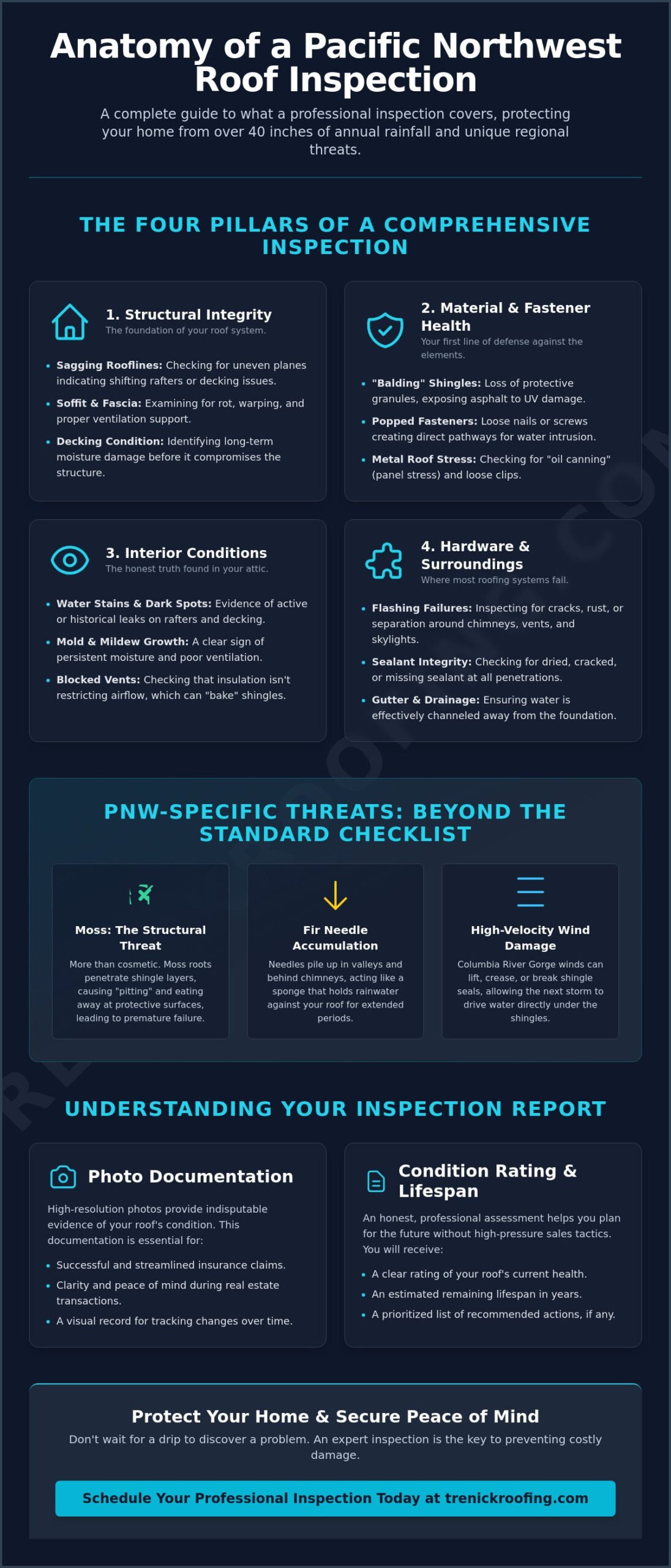
A professional evaluation is much more than a quick glance at your shingles. To understand what does a roof inspection cover, you have to look at the home as an integrated system. We categorize this process into four essential pillars: structural integrity, material health, interior conditions, and hardware surroundings. While a general home inspection overview provides a broad look at a property, a specialized roofing assessment dives deep into the technical nuances that keep your family dry.
Our team begins by checking the “bones” of the system. We look for sagging rooflines or uneven planes that suggest shifting rafters or compromised decking. We also examine the integrity of the soffit and fascia, as these components provide critical support and ventilation for the entire structure; if you find these surfaces need a fresh protective finish, you can check out Brush Hour LLC. If these structural elements show signs of rot or warping, it often points to long-term moisture issues that require immediate attention.
Surface Material and Fastener Integrity
Inspectors specifically hunt for “balding” shingles where protective granules have washed away. This loss of granules leaves the asphalt exposed to UV rays, which accelerates deterioration and leads to brittle materials. For standing seam metal roofing, the focus shifts to panel clips and potential “oil canning” or expansion stress that can occur during PNW temperature swings. We also check for “popped nails” or loose screws. These small hardware failures create direct pathways for water to enter your home.
The most telling signs of a roof’s health are often found inside the attic. We investigate the space for water stains on the rafters and mold growth on the underside of the deck. These indicators tell us if the roof is performing its job during heavy rain cycles.
Attic Ventilation and Moisture Checks
Proper airflow is vital to prevent “hot roofs” that essentially bake your shingles from the inside out. We search for dark spots on the rafters which indicate active or historical leaks often missed from the exterior. Even if the shingles look perfect, these interior markers provide the honest truth about your roof’s performance. We also verify that insulation isn’t blocking your intake vents, as restricted airflow can lead to premature material failure.
When homeowners ask what does a roof inspection cover, they often forget the critical role of hardware and seals. We evaluate the condition of chimneys, vents, and skylights to ensure every penetration is watertight—for insights on maintaining these specialized features, visit SYNERGY ROOFING – ROOFING & SKYLIGHT SPECIALIST. Flashings are the most common point of failure in any roofing system; therefore, we examine them for cracks, rust, or separation that could allow water to bypass your shingles.
PNW Specifics: What Vancouver and Battle Ground Inspectors Look For
A standard checklist often misses the environmental nuances that define life in Southwest Washington. When considering what does a roof inspection cover in our region, you have to account for the relentless moisture and organic debris unique to the Pacific Northwest. Our local weather patterns, including the high-velocity winds from the Columbia River Gorge, require a specialized eye to identify vulnerabilities before they become emergencies.
Inspectors prioritize several regional factors during a walkthrough:
- Fir Needle Accumulation: These needles often pile up in roof “valleys” and behind chimneys. They act like a sponge, holding rainwater against your shingles and underlayment for weeks at a time.
- Wind Damage Assessment: We look for shingles that have been lifted or creased by specific wind patterns common in the Gorge. Even if a shingle hasn’t blown off, a broken seal allows the next storm to drive water directly into the roof deck.
- Gutter and Drainage Function: A roof is only as good as its drainage system. We verify that your seamless gutter installation is clear and effectively moving water away from your home’s foundation to prevent soil erosion and basement leaks.
The Hidden Danger of Moss in Southwest Washington
Moss is more than a cosmetic nuisance; it’s a structural threat. Its roots actually penetrate shingle layers to reach the limestone filler, making simple pressure washing an impossible solution without causing permanent damage. During an evaluation, we look for “pitting” in the asphalt caused by long-term moss colonies that have eaten away at the material’s protective surface. If you’ve noticed green growth creeping across your roof, a professional assessment of your shingles can determine if the damage is still manageable or if the integrity of the deck is at risk.
Flashing and Sealant Vulnerabilities
High-rain areas like Battle Ground put immense pressure on “step flashing” around dormers and skylights. These are the primary leak points we see in local homes. We also evaluate the condition of rubber “boots” around plumbing vents. These components often crack due to the temperature swings between our damp winters and dry summers, creating a direct path for leaks that often go unnoticed until the ceiling shows a visible stain.
Understanding Your Inspection Report and Next Steps
Once you understand what does a roof inspection cover, the focus shifts to interpreting the findings. A professional report isn’t just a list of problems; it’s a strategic roadmap for your home’s protection. We categorize the health of your system into condition ratings. A “Good” rating suggests standard maintenance is sufficient, while a “Critical” rating indicates active leaks or structural failures that require immediate intervention to prevent interior damage.
High-resolution photo documentation is perhaps the most vital part of this report. These images provide undeniable proof of the roof’s state, capturing everything from granular loss to wind-lifted shingles. We then translate these visual findings into a prioritized roof repair service plan. This ensures you address the most urgent vulnerabilities first, rather than feeling overwhelmed by a long list of minor suggestions.
Repair vs. Replacement: The 2026 Decision Framework
Deciding between a targeted fix and a total overhaul often comes down to the 30% rule. If damage or wear exceeds 30% of the total roof surface, a full roof replacement is usually the more responsible financial move. You must also evaluate the system’s age against the estimated repair costs. It’s rarely wise to invest heavily in a 20-year-old asphalt roof that’s already reached the end of its reliable lifespan.
Navigating Insurance for Storm Damage Restoration
Actual Cash Value (ACV) pays for your roof’s current worth after accounting for depreciation, while Replacement Cost Value (RCV) covers the actual cost to install a new roof at today’s prices. A detailed inspection report is your best defense against claim denials. By providing clear evidence of wind or hail impact, you give the insurance adjuster the factual data they need to approve your storm damage restoration. This professional documentation creates a frictionless path from the initial discovery of damage to a fully restored home.
Protecting Your Investment with Expert Local Insight
A professional assessment is your best defense. It protects against the heavy rains and organic growth that define our region. By addressing the four pillars of structural and material health, you ensure small vulnerabilities don’t turn into catastrophic failures. We’ve explored exactly what does a roof inspection cover, from hidden attic moisture to flashing integrity in high-wind zones. This detailed documentation provides peace of mind. It’s also the essential evidence required for successful insurance claims.
As a family-owned and operated team since 2018, Trenick Roofing specializes in PNW-specific materials. We prioritize your security through performance-based payment structures that keep our team accountable to you and your property. Schedule your professional roof inspection with Trenick Roofing today.
Don’t wait for a visible leak to discover your roof’s true condition. Take proactive steps now to ensure your home remains a reliable shield for years to come.
Frequently Asked Questions
How long does a professional roof inspection take?
A standard professional roof inspection typically takes between 45 and 90 minutes to complete. The exact duration depends on the size of your home and the complexity of the roof’s design. If your property features multiple levels, steep pitches, or several skylights, the inspector will need more time to evaluate every transition and seal thoroughly.
Do I need to be home for the roof inspection?
You don’t need to be home for the exterior assessment, but your presence is vital for the interior portion of the checkup. A complete evaluation requires the inspector to enter the attic to look for moisture stains and ventilation issues. If you can’t be home, providing a way for the technician to access the attic ensures you get a full report on your home’s health.
Is a roof inspection the same as a home inspection?
No, a specialized roof inspection is a much more technical and focused evaluation than a general home inspection. While a home inspector looks at all property systems, a roofing specialist focuses solely on the integrity of the materials and structural bones of the roof. Understanding what does a roof inspection cover helps you see why it’s a necessary step for long-term protection.
Can a roof inspection detect leaks that haven’t reached the ceiling yet?
Yes, professional inspectors can identify moisture intrusion long before it becomes a visible drip in your living space. By examining the underside of the roof deck in the attic, we can find damp rafters or wet insulation caused by minor leaks. Catching these early prevents the structural rot and mold growth that often follow unnoticed water damage.
How much does a roof inspection cost in Vancouver, WA?
The cost for an inspection in the Vancouver area depends on the size of the roof and the depth of the report required. Factors like roof steepness, the number of stories, and whether you need drone photography or moisture mapping will influence the final price. We suggest reaching out to a local professional to get a clear estimate based on your specific roof type and goals.
Will a roof inspection help me with my insurance claim?
A professional inspection report is a foundational piece of evidence for any storm damage insurance claim. By detailing exactly what does a roof inspection cover, the report gives adjusters the data they need to verify wind or hail damage. This clarity makes it much easier for insurance companies to process and approve your claim without unnecessary denials.